
What Are You Looking For?

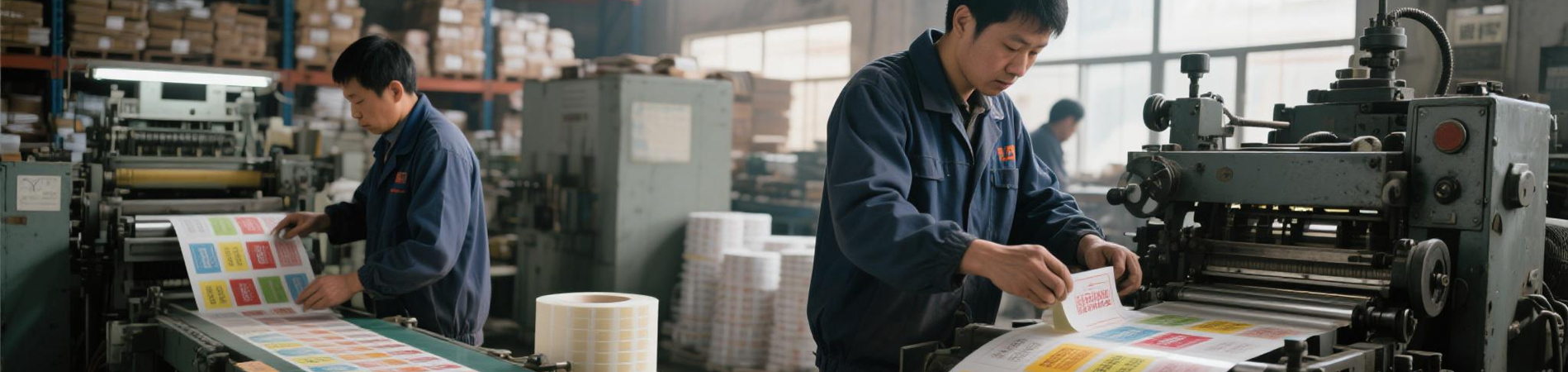
Despite the layered and compounding challenges, the underlying development logic of the label industry has never changed. Core product performance is the foundation for a company's foothold; risk control is the key to stable operations; and the ability to proactively adapt to change and flexibly adjust strategies is the decisive factor that directly widens the gap between enterprises and determines success or failure in the industry.

01 Material Complexity Continues to Escalate—The Era of Universalization Is Over
From the perspective of end-user visual presentation, labels appear simple in appearance and structure. In the perception of most brand owners, as long as a label functions without quality failure, there is no significant difference. However, a deeper look into the core of the industry chain reveals that over the past decade, the technical threshold and overall complexity of label materials have risen substantially. Throughout the industry's development, multiple demands—environmental protection, cost, process, compliance, and performance—have become intertwined and even mutually constraining, forcing continuous innovation in material technology. Companies must simultaneously balance multiple sets of contradictory core development needs.On one hand, the industry needs to develop lightweight, thin-gauge materials that reduce raw material consumption, contribute to carbon neutrality, and achieve sustainability goals while maintaining or even enhancing the comprehensive performance of labels. On the other hand, printing and processing technologies must be continuously optimized to improve production efficiency and strictly control production costs, helping enterprises reduce expenses and increase efficiency. At the same time, materials need stronger equipment compatibility to adapt to multiple types of printing equipment and meet the needs of flexible production across multiple plants. Beyond that, increasingly stringent global regulatory systems require label materials to achieve full-dimensional compliance, while the proliferation of various new labeling processes has also set higher standards for the adaptability and stability of adhesives.
Meanwhile, the long-standing industry misconception that "one material fits all scenarios" no longer aligns with the current market landscape. Digital printing has rapidly gained traction thanks to its advantages in short runs, customization, and flexible production, but it has also introduced new variables to the application of raw and auxiliary materials.
Different brands and models of printing equipment use inks with significantly different chemical systems. New materials have become far more sensitive to the compatibility of substrate surface coatings, and the process window that ensures stable printing and high-quality finished products has become increasingly narrow, substantially raising the requirements for production process precision and material compatibility.

This means that mature materials traditionally suited for flexographic and offset printing processes often exhibit printing defects and performance instability when applied to digital printing equipment.
Driven by dual-carbon policies and environmental trends, market demand for sustainable materials has exploded. Today, customers no longer simply pursue eco-friendly attributes; they require materials incorporating recycled content such as PCR (Post-Consumer Recycled) films and PCW (Post-Consumer Waste) recycled paper to achieve performance on par with—or even exceeding—traditional materials, truly balancing environmental responsibility with practicality without sacrificing printing precision, production speed, or finished product durability.
At the same time, raw material traceability and compliance have become industry necessities. FSC (Forest Stewardship Council) certification remains the core mandatory standard for environmental traceability of paper-based raw materials. Industry regulations enacted by various countries and access policies of leading retail brands continue to force enterprises to improve their green supply chain systems. The implementation of the EU Deforestation Regulation (EUDR) further underscores the importance of transparent, traceable supply chains for paper-based products. Compliance and green practices have become baseline requirements for market entry.
Currently, the variety of eco-friendly materials is also continuously expanding. Beyond traditional recycled paper, tree-free paper and plant-based alternative fibers such as hemp, agave, and sugarcane are rapidly gaining popularity thanks to their unique environmental attributes and premium texture. These new eco-friendly materials not only satisfy brands' green marketing needs but also enable differentiated packaging visual effects. They are now widely used in mid-to-high-end categories such as alcoholic beverages, specialty foods, and beauty and personal care, demonstrating tremendous market growth potential.

02 Persistent Supply Chain Volatility Triggers Comprehensive Restructuring of Industry Risk Control Models
Market fluctuations over the past three years have completely shattered the long-stable supply chain structure of the label industry. Extended delivery times, tight raw material quotas, frequent upstream material formulation adjustments, and volatile raw material prices have erupted simultaneously, thoroughly overturning traditional supply chain management thinking and forcing label printing enterprises to restructure raw material procurement strategies, optimize supplier systems, and upgrade risk control models.The development logic of industry supply chains has officially shifted from the traditional lean inventory model to a resilient, risk-resistant model. While lean inventory management still offers cost-reduction value, it can no longer meet anti-risk needs in the current market environment. At this stage, leading label companies are optimizing their supply chain layouts across multiple dimensions—establishing dual-supplier procurement systems, rationally planning the ratio of domestic to imported raw materials, promoting material standardization, reducing material SKU categories, and collaborating with upstream and downstream partners across the entire industry chain to sign material change coordination agreements—all aimed at comprehensively lowering supply chain risks.
Today, supply chain resilience has become a core competitive advantage for label enterprises. A robust, risk-resistant supply chain not only helps companies weather sudden crises such as raw material shortages and supply disruptions but also enables continuous, stable delivery and service to core customers when large-scale industry shutdowns occur and competitors' production capacity is constrained, thereby securing market share. Building a high-resilience supply chain requires substantial investment in human resources, capital, and time. Therefore, abandoning one-way supply models and selecting quality suppliers willing to collaborate, co-build, and share risks is the key to long-term retention of core brand customers and stable operations.
Amid market transformation, industry practitioners' mindsets must also evolve in tandem. Advantages that were once merely brand promotion highlights—local production, vertically integrated processes, and stable raw material traceability channels—have now become core elements of corporate strategic planning. The production origin, manufacturing processes, and supply chain stability of label materials directly determine a company's risk resistance and market competitiveness, forming the core foundation for long-term development.
Beyond that, the professional experience accumulated within the industry is the most easily overlooked yet most valuable hidden competitive advantage today. As industry talent mobility intensifies and technology rapidly iterates, mature hands-on experience, process solutions, and problem-anticipation capabilities have become increasingly scarce and impossible to replicate quickly.
For label enterprises seeking long-term development and breakthroughs from industry bottlenecks, three core areas deserve focused investment: cultivating and retaining professional technical talent teams over the long term to solidify the technical foundation; establishing comprehensive product application testing and feedback loops to continuously optimize products and processes; and abandoning pure sales-driven thinking in favor of empowering customers through technical education and professional expertise to achieve mutual success. These core investments enable companies to continuously create value and maintain competitive advantages even in environments of rapid product iteration and ongoing market transformation.
Adhesive Label Companies,Adhesive Label Businesses,Adhesive Label,Label Businesses,adhesive label manufacturers,Adhesive label companies,Label Companies


 Lianqian Neighborhood, Siming District, Xiamen, Fujian,
China 361008
Lianqian Neighborhood, Siming District, Xiamen, Fujian,
China 361008 Tel: 0086-13395056294
 Email: sinitan@foxmail.com