
What Are You Looking For?

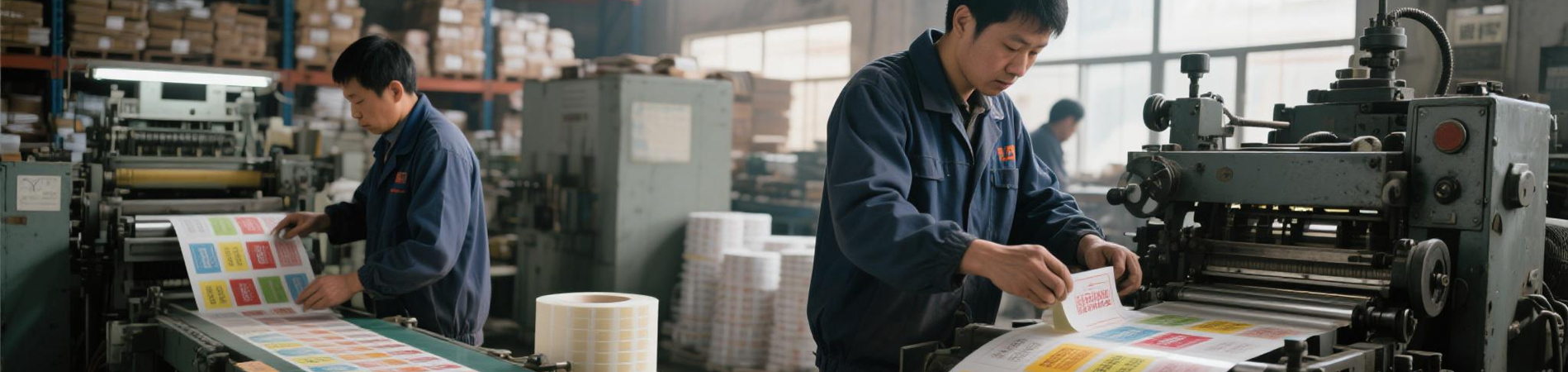
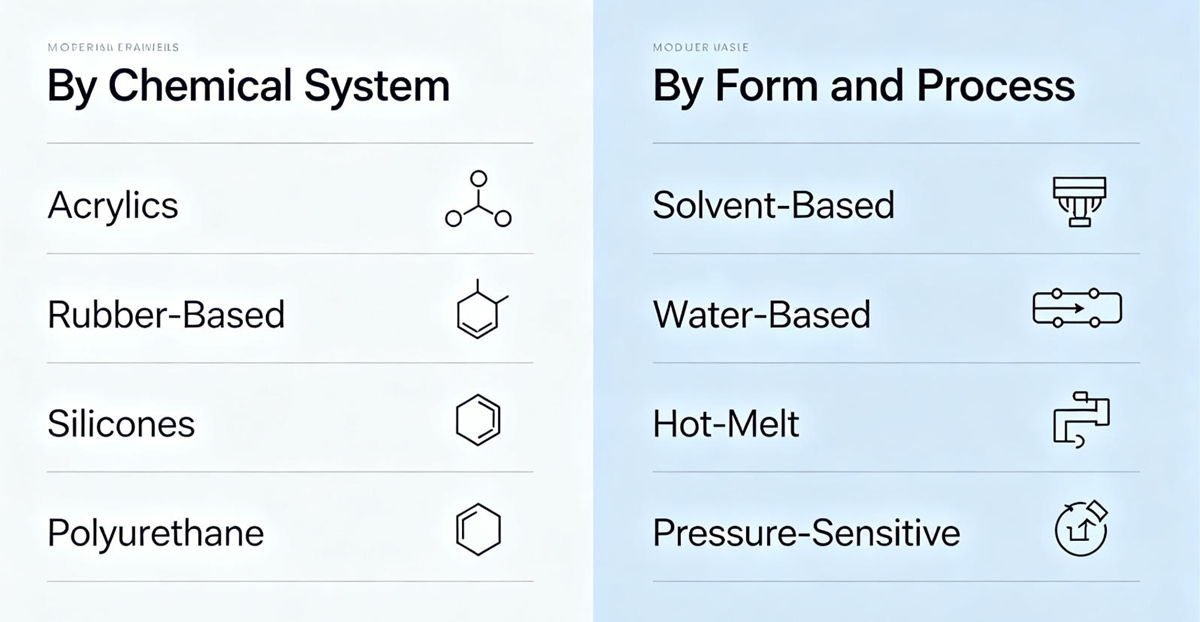
Self-adhesive label adhesives are primarily classified by chemical system into three categories: acrylic, rubber, and silicone; by form and process, they are divided into water-based adhesive, solvent-based adhesive, hot melt adhesive, removable adhesive, etc. Below is a detailed explanation by commonly used types.
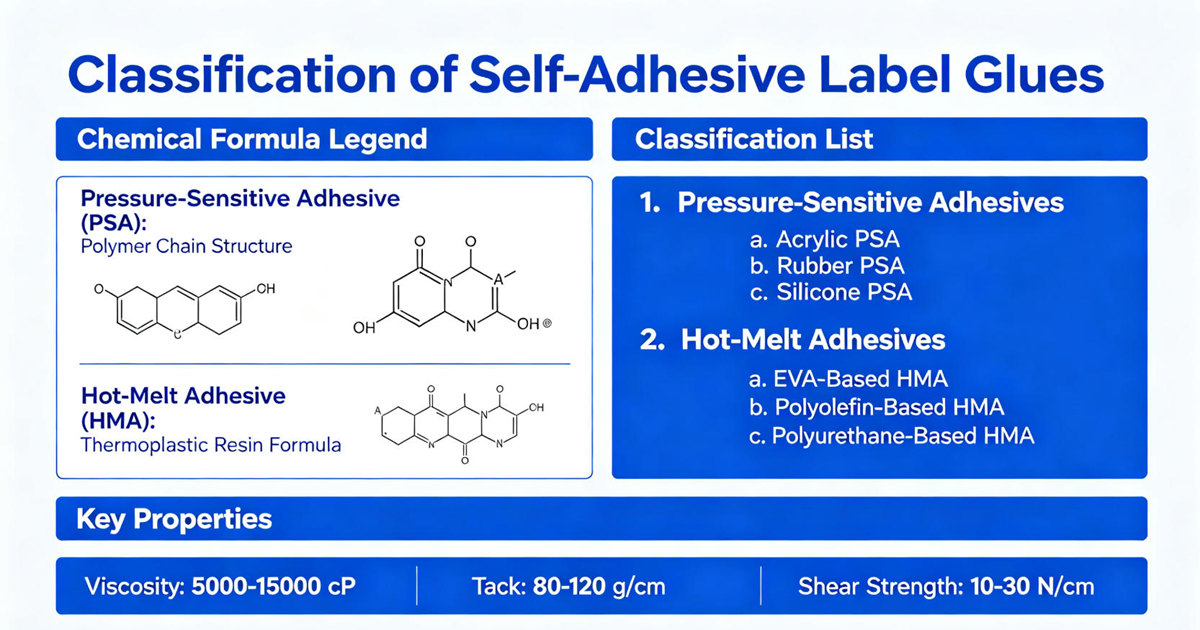
I. Classification by Process / Form (Most Commonly Used)
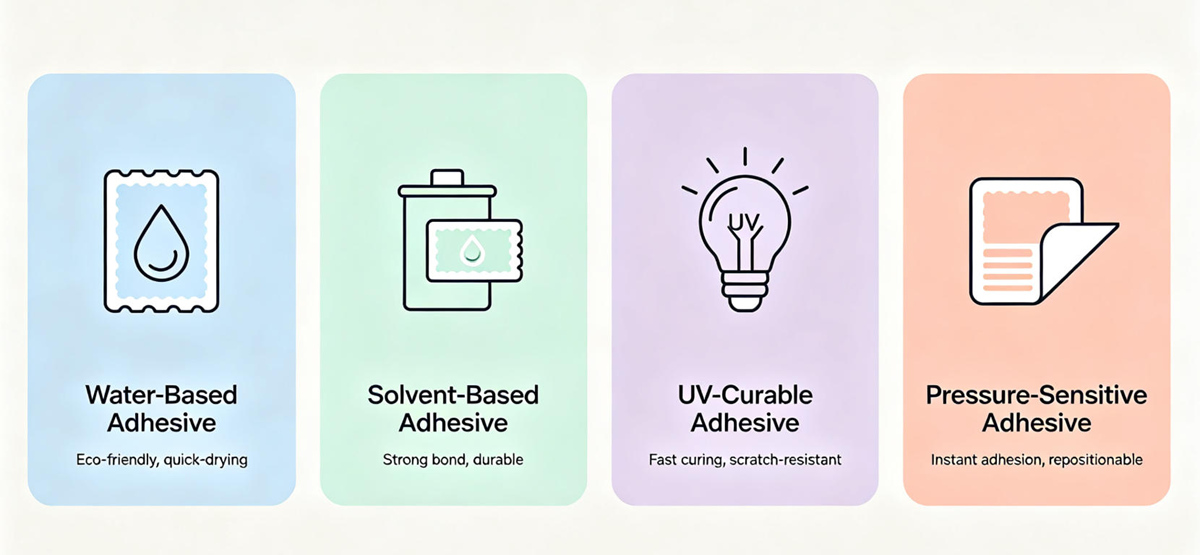
1. Water-Based Adhesive (Water Glue, Acrylic Emulsion Type)
| Item | Description |
| Composition | Acrylic ester emulsion, water as solvent |
| Advantages | Environmentally friendly and non-toxic, low cost, good temperature resistance (-20℃~90°C), transparent; suitable for food / daily chemical / general packaging |
| Disadvantages | Average water / oil resistance, easy to lose adhesion in high humidity; poor adhesion on oily / wet surfaces |
| Typical Applications | Paper labels, food and beverage, daily necessities, general packaging |
2. Solvent-Based Adhesive (Oil Glue, Acrylic Solvent Type)
| Item | Description |
| Composition | Acrylic ester / rubber, organic solvent as carrier |
| Advantages | Strong adhesion, water and oil resistant, good holding power, anti-aging; suitable for humid / outdoor / difficult-to-bond surfaces (PP, PE) |
| Disadvantages | VOC emissions, strong odor, high cost, not environmentally friendly |
| Typical Applications | Outdoor labels, daily chemical films, automotive / home appliances, oil-resistant scenarios |
3. Hot Melt Adhesive (Rubber-Based / Acrylic-Based)
| Item | Description |
| Composition | Rubber (SIS/SBS) or acrylic, solvent-free, applied by heating and melting |
| Advantages | Extremely high initial tack, good low-temperature performance (can be applied at -10°C), water resistant, environmentally friendly, low cost; can adhere to surfaces with slight oil / water |
| Disadvantages | Poor heat resistance (≤70°C), softens at high temperatures, becomes brittle at low temperatures, not repositionable; not suitable for PVC |
| Typical Applications | Supermarket price tags, food and pharmaceuticals, low-temperature logistics, rough surfaces |
4. Removable Adhesive (Acrylic / Rubber)
| Item | Description |
| Characteristics | Moderate tack, firm adhesion, leaves no residue upon removal, can be repositioned |
| Types | Permanent removable: long-term application, no residue when peeled; Temporary removable: short-term use, easy to peel off |
| Typical Applications | Promotional stickers, size labels, temporary identification, removable labels for glass / home appliances |
II. Classification by Chemical System (Core Performance)
1. Acrylic Series (Most Mainstream)
| Type | Characteristics |
| General Permanent Type | Good weather resistance / anti-aging, -40°C~120°C, transparent, suitable for glass / metal / plastic |
| Removable Type | Low initial tack, moderate holding power, -20°C~80°C, no residue, for temporary labels |
| High-Tack Type | Strong adhesion to low surface energy materials (PP/PE) |
2. Rubber Series (Natural / Synthetic Rubber)
| Item | Description |
| Characteristics | Extremely high initial tack, suitable for rough / porous surfaces (wood, cement, powder coating); poor weather resistance, prone to aging, low heat resistance (≤60°C) |
| Typical Examples | Tire adhesive, carpet adhesive, temporary fixing adhesive |
3. Silicone Series (High-End Specialty)
| Item | Description |
| Characteristics | Ultra-high temperature resistance (-60°C~260°C), solvent resistant, compatible with low surface energy materials; soft, anti-UV |
| Typical Applications | Electronics soldering, high-temperature pipelines, aerospace, silicone surfaces |


 Lianqian Neighborhood, Siming District, Xiamen, Fujian,
China 361008
Lianqian Neighborhood, Siming District, Xiamen, Fujian,
China 361008 Tel: 0086-13395056294
 Email: sinitan@foxmail.com